

Bitcoin and the Top 10 Cryptocurrencies in 2026: A Snapshot of the Market
5 min read • 31 views
Unknown Author
April 10, 2026
Introduction
In 2026, the cryptocurrency market has evolved from a niche experiment into a critical part of the global financial landscape. At the center of this transformation stands Bitcoin (BTC), the largest and most widely recognized digital asset, with a market capitalization estimated between $1.4 trillion and nearly $1.9 trillion depending on the source and date. Far ahead of every other token, Bitcoin shapes how traders, institutions, and regulators think about digital money, scarcity, and decentralized value transfer.
1. Bitcoin (BTC): The Digital Gold Standard
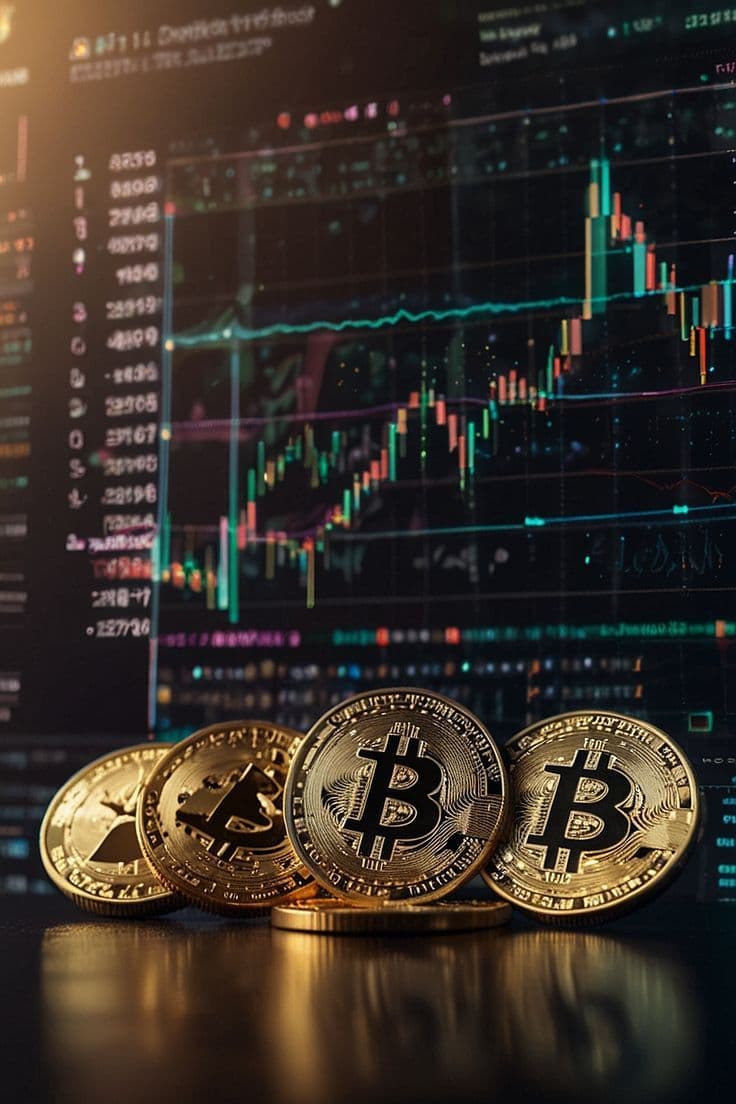
Bitcoin is the original and largest cryptocurrency, with a fixed supply of 21 million coins and a market cap that often represents over half of the total crypto market. In early‑April 2026, Bitcoin trades around $70,000–$73,000 per coin, giving it a valuation in the $1.4–1.9 trillion range.
Investors and institutions increasingly view Bitcoin as “digital gold”—a long‑term store of value that can hedge against inflation, currency devaluation, and geopolitical uncertainty. Its simple, decentralized design and strong network effects make it the most liquid and widely adopted crypto, especially through regulated products such as spot ETFs and custody platforms. For Nairobi‑based users, this means Bitcoin is not only the largest crypto by market cap but also the easiest to buy, sell, and monitor through local exchanges and global platforms.
2. Ethereum (ETH): The Smart‑Contract Backbone
Ethereum is the second‑largest cryptocurrency, with a market cap hovering around $250–400 billion in 2026. Each ETH trades roughly in the $2,100–$2,200 range, reflecting its role as the backbone of the decentralized‑finance (DeFi), NFT, and Web3 application ecosystem.
Unlike Bitcoin, Ethereum is optimized for smart contracts: self‑executing code that powers lending protocols, decentralized exchanges, token sales, and more. Layer‑2 solutions such as rollups and sidechains have helped reduce fees and improve speed, allowing Ethereum to remain the preferred platform for institutional‑grade DeFi and tokenized‑asset projects. For investors in Nairobi, holding Ethereum alongside Bitcoin offers exposure to the “infrastructure layer” of crypto, capturing growth in DeFi, real‑world‑asset tokenization, and enterprise‑grade applications.
3. Tether (USDT): The Dollar‑Backed Workhorse
Tether (USDT) is the largest stablecoin, with a market cap of about $150–184 billion in 2026. Each USDT is pegged near $1.00, making it the most widely used “on‑chain dollar” for trading, liquidity pools, and bridging between fiat and crypto.
USDT is deployed across virtually every major exchange and on multiple blockchains, which gives it enormous network liquidity. Traders use it to pause positions during volatile periods without leaving the crypto ecosystem, while emerging‑market users rely on it to move value quickly and cheaply across borders. For Nairobi‑based investors, USDT is especially useful as a stable intermediate asset when entering or exiting volatile altcoins.
4. Binance Coin (BNB) and the Exchange Ecosystem
Binance Coin (BNB) ranks fourth in the top‑10 list, with a market cap of roughly $90–125 billion and a price around $650–$700 per coin. BNB is the native token of the Binance ecosystem, which includes the world’s largest crypto exchange by volume and the BNB Chain smart‑contract network.
Users hold BNB to pay reduced trading fees, participate in token launches, stake for yield, and interact with DeFi and gaming apps on BNB Chain. In 2026, BNB remains a powerful example of how exchange‑driven tokens can evolve into full‑fledged ecosystem assets, especially in emerging markets where low‑cost, high‑throughput blockchains are in high demand.
5. XRP (Ripple): Cross‑Border Payments
XRP, the token of the Ripple network, sits around fifth place with a market cap of $85–125 billion and a price near $1.40–$1.45 per coin. XRP is designed to facilitate fast, low‑cost cross‑border payments and is tightly integrated with Ripple’s payment‑routing infrastructure.
Banks and payment providers that use Ripple’s solutions often hold XRP or use it as a liquidity bridge, particularly in corridors where legacy settlement systems are slow or expensive. For Nairobi‑based investors, XRP is most relevant if you are interested in the remittance and institutional‑payments angle of crypto, rather than purely speculative or DeFi‑focused plays.
6. USD Coin (USDC) and Regulated Stablecoins
USD Coin (USDC) is the second major dollar‑backed stablecoin in the top‑10, with a market cap of about $60–80 billion and a price firmly near $1.00. USDC is issued by regulated financial entities and is often audited or backed by short‑term U.S.‑dollar‑denominated assets.
Because of its transparency and compliance‑oriented design, USDC is widely used in institutional DeFi, tokenized‑treasury products, and regulated lending platforms. For Nairobi‑based users, USDC is a safer alternative to more opaque stablecoins when you want a stable, audited, and globally recognized bridge into the crypto ecosystem.
7–10: Solana, TRON, Dogecoin, and Cardano
Further down the top‑10 list sits a mix of high‑performance chains and experimental assets:
Solana (SOL): With a market cap of roughly $50–80 billion, Solana is one of the fastest and cheapest blockchains for DeFi, NFTs, and gaming. It appeals to retail‑focused developers and traders who want high throughput and low fees.
TRON (TRX): In the $23–27 billion market‑cap range, TRON focuses on decentralized content, entertainment, and stablecoin‑based payments, with strong adoption in Asia.
Dogecoin (DOGE): With a market cap around $15–30 billion, Dogecoin is a meme‑inspired coin that retains a large community and is sometimes used for small‑value payments and social‑tipping.corporatefinanceinstitute+1
Cardano (ADA): Cardano sits around $13–24 billion, positioned as a research‑driven, proof‑of‑stake blockchain that emphasizes security, scalability, and formal methods. It is often favored by more conservative, long‑term‑oriented investors