

Introduction to Software Development Life Cycle (SDLC)
3 min read • 20 views
Unknown Author
April 7, 2026
What is SDLC?
SDLC is a phased methodology for planning, creating, testing, deploying, and maintaining software applications to meet user needs and business goals. In simple terms, it's like constructing a building: you start with blueprints (planning), build floors (coding), inspect for safety (testing), move in tenants (deployment), and later renovate (maintenance). It minimizes risks, controls costs, and aligns teams through repeatable steps.

Core Phases
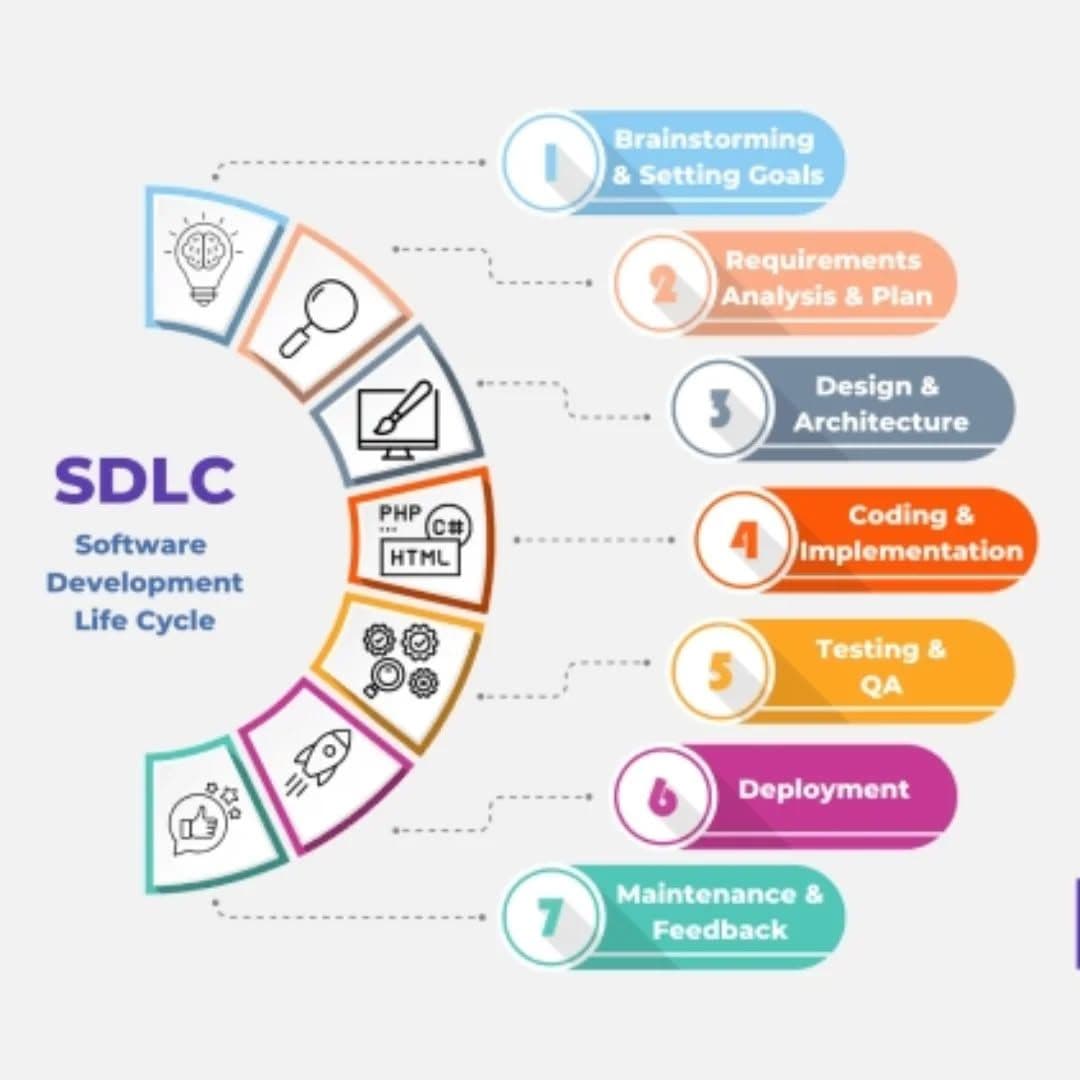
SDLC typically includes seven interconnected phases, often visualized as a flowchart or cycle diagram for clarity.
Planning: Define project scope, resources, timeline, and feasibility; output is an initial project plan
Requirements Analysis: Gather detailed user needs via interviews or surveys; produce requirement documentation
Design: Create high-level (architecture, databases) and low-level (APIs, workflows) blueprints; deliver design documents.
Implementation (Coding): Developers write code using IDEs and version control like Git; generate source code and prototypes.
Testing: Check for bugs through unit, integration, and user acceptance tests; refine the software.
Deployment: Release to production, often via CI/CD pipelines for automation.
Maintenance: Monitor, fix issues, and update post-launch for ongoing improvements.
Popular SDLC Models
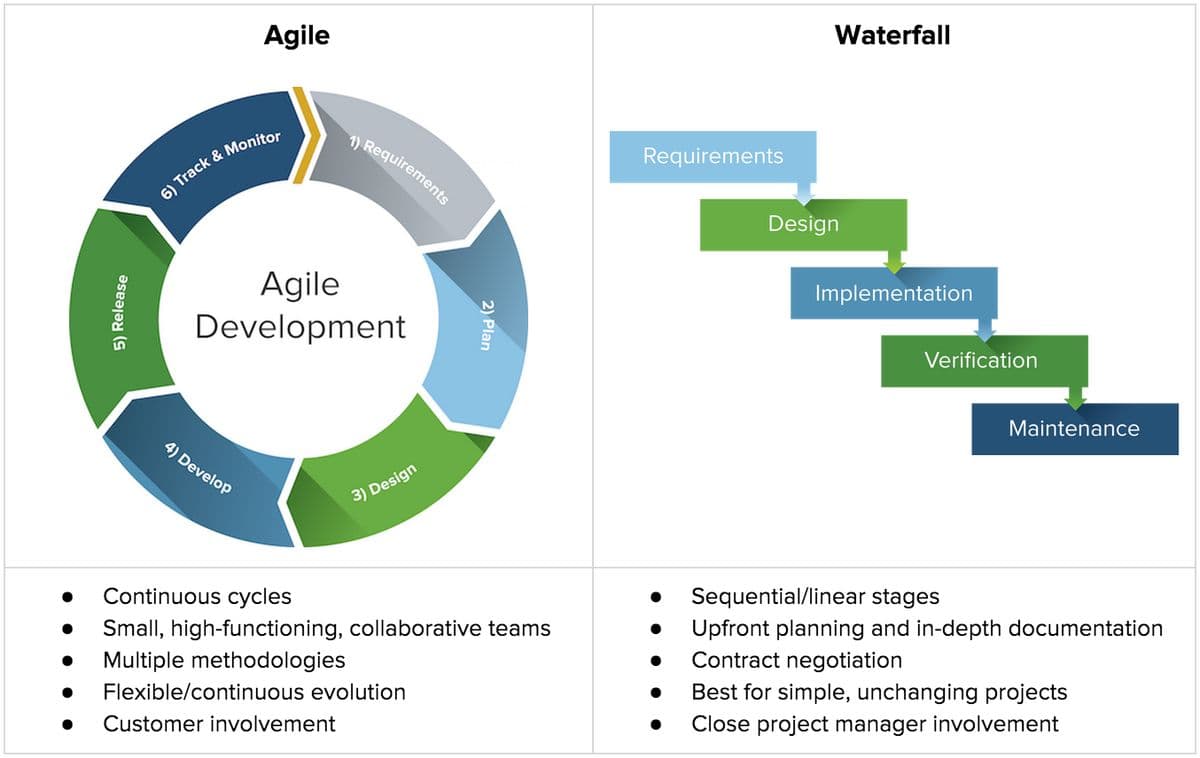
Different models adapt phases to project needs—Waterfall is linear for fixed scopes, while Agile iterates in sprints for flexibility. Others include Spiral (risk-focused) and DevOps (continuous integration). Choose based on team size and change expectations; a comparison table clarifies fits
Agile Model: Emphasizes flexible, iterative development, and customer collaboration. Teams work in short sprints, making it ideal for projects with changing requirements.
Waterfall: A linear and sequential approach where each phase (requirement, design, development, testing) must be completed before the next begins. It is suitable for small projects with well-defined, stable requirements.
V-model: An extension of the Waterfall model that pairs every development stage with a corresponding testing phase, enhancing early bug detection.
Iterative model: Develops software in smaller, repeating cycles (iterations), allowing for incremental improvements and feedback after each release.
Spiral model: Combines iterative development with the systematic aspects of Waterfall, with a heavy focus on risk analysis, making it ideal for large, complex projects.
Rapid Application Development:Focuses on creating prototypes and iterative development, aiming for fast delivery and user feedback.
Hybrid Model:Combines the structure of Waterfall with the flexibility of Agile, often used in large enterprises to balance control and speed.
Kanban:An Agile approach that focuses on visualizing work, limiting work-in-progress, and optimizing workflow, often using boards to track tasks.
Why SDLC Matters
Following SDLC catches defects early, cutting costs by up to 100x compared to post-deployment fixes. In 2026's fast-paced tech, it supports AI tools and remote teams, ensuring scalable software for startups or enterprises. Beginners can start with tools like Jira for tracking phases.