



Top Programming Languages for Full Stack Development in 2026
4 min read • 11 views
Unknown Author
April 4, 2026
Introduction
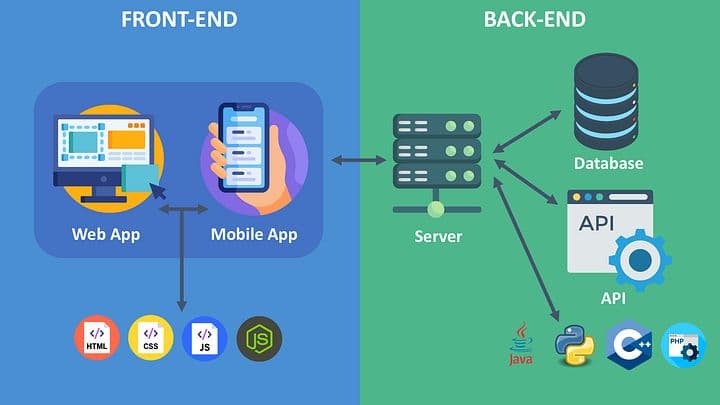
Top programing languages for full-stack development in 2026 .This list is not a rigid hierarchy, but a practical guide. It considers real full stack capability, job demand, ecosystem maturity in the AI era, and how easy it is to actually ship something without getting stuck in complexity.
10 – PHP: The Enduring Web Workhorse
PHP still powers a significant portion of the web, especially content-heavy platforms, small business websites, and legacy systems. Modern frameworks like Laravel and Symfony have brought structure, better security practices, and cleaner development workflows, making PHP more relevant than its older reputation suggests.

For beginners and career switchers, PHP remains one of the easiest entry points into web development. However, its momentum is slower in AI-driven tooling and modern frontend-heavy applications, where other ecosystems are moving faster.
9 – C#: Enterprise-Ready Full Stack
C# continues to thrive in enterprise environments, particularly within the .NET ecosystem. With tools like ASP.NET Core, developers can build robust backend systems and extend into desktop and even frontend experiences in Microsoft-centric stacks.

It shines in industries like finance, healthcare, and logistics, where stability and long-term systems matter. The trade-off is complexity it can feel heavy for beginners who want to quickly prototype and deploy simple applications.
8 – Go: Cloud-Native Efficiency
Go has carved out a strong role in backend development, particularly in cloud-native systems, APIs, and microservices. Its speed, simplicity, and concurrency model make it ideal for scalable infrastructure and distributed systems.

In a full stack context, Go is usually paired with a JavaScript or TypeScript frontend. It’s a strong choice for performance-focused developers, but less suited for those prioritizing rich, interactive UI development.
7 – Kotlin: Android-Centric Stack
Kotlin has become the default language for Android development, offering a more concise and safer alternative to Java. It integrates well with JVM-based backends, enabling mobile-first full stack architectures.

Its strength lies in Android-driven products such as fintech, logistics, and consumer apps. Outside of that ecosystem, however, it is more specialized than general-purpose full stack languages.
6 – Swift: Apple Ecosystem Specialist
Swift dominates iOS and macOS development, making it essential for building high-performance, design-focused applications in the Apple ecosystem. It is particularly valuable for consumer-facing products where user experience is critical.

Like Kotlin, Swift is rarely used alone in full stack setups. It typically pairs with backend languages like Node.js or Python, making it part of a multi-language strategy rather than a universal solution.
5 – Java: The Enterprise Backbone
Java remains a cornerstone of enterprise software, especially in banking, telecom, and government systems. Frameworks like Spring Boot support large-scale backend architectures and microservices.

While its verbosity can be challenging for beginners, Java offers long-term stability and a vast job market. It is best suited for developers aiming at structured, large-scale systems rather than rapid experimentation.
4 – Python: AI and Data Powerhouse
Python leads in AI, machine learning, and data-driven applications, while also serving as a capable backend language through frameworks like Django and FastAPI. It plays a central role in modern, data-heavy products.

Its simplicity and versatility make it highly beginner-friendly, but it is typically paired with JavaScript for frontend work. Python is strongest as part of a full stack rather than a complete standalone solution.
3 – Rust: Performance and Safety First
Rust is gaining traction in systems programming and high-performance backend services, particularly where memory safety and concurrency are critical. It is increasingly used in infrastructure, blockchain, and performance-sensitive applications.

However, its steep learning curve makes it less accessible for general full stack development. It is best suited for developers focused on performance, reliability, and low-level control rather than broad web application work.
2 – TypeScript: The Scalable Standard
TypeScript has become the standard for modern web applications by adding static typing to JavaScript. This improves maintainability, tooling, and scalability, especially in large codebases.

It is widely used across frontend and backend frameworks, making it one of the most in-demand skills in full stack development. For many teams, it represents the production-ready evolution of JavaScript.
1 – JavaScript: The Universal Core
JavaScript remains the foundation of web development, running in every browser and powering backend systems through Node.js. It enables developers to build complete applications within a single ecosystem.

Its flexibility, massive community, and ecosystem make it the most accessible and widely used language. In practice, it is often paired with TypeScript, forming the dominant full stack combination in 2026.